

Access Bank Seeks Stronger Financing, Policy Alignment to Boost Intra-African Trade
By The People’s Voice Nigeria News
Access Bank Plc has called for stronger financial collaboration, improved digital payment systems and policy alignment across African countries to close the continent’s persistent trade finance gap and accelerate intra-African commerce.
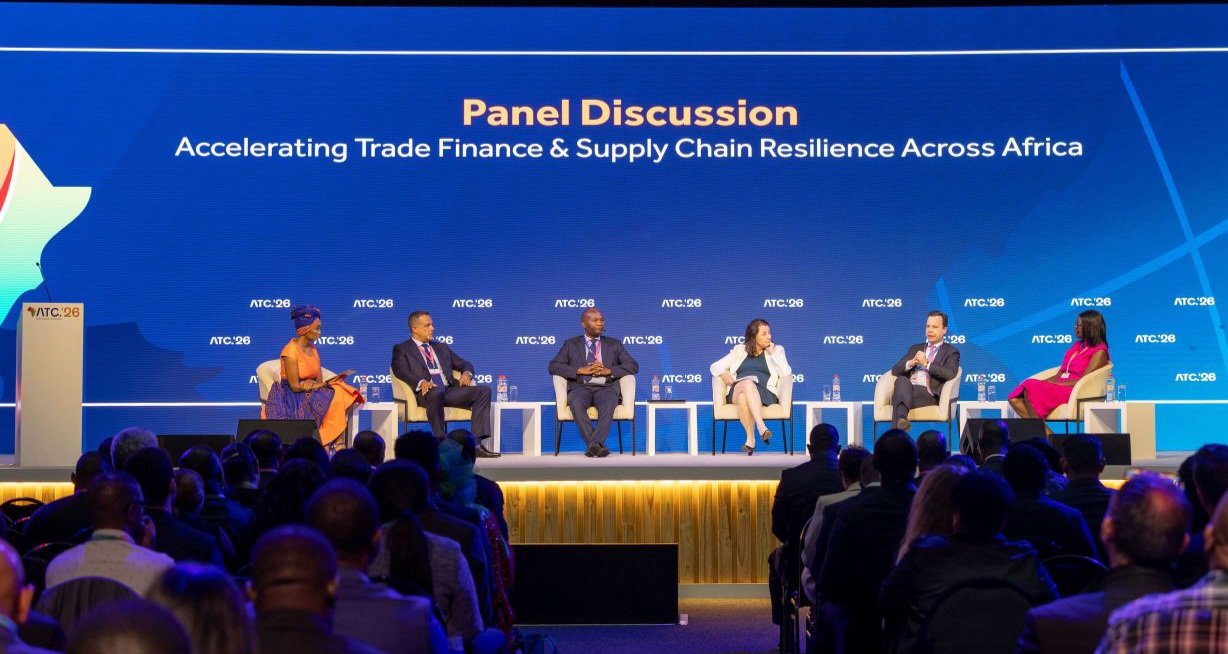
The call was made at the Africa Trade Conference (ATC) 2026 hosted by the bank in Cape Town, South Africa, where policymakers, development finance institutions and private sector leaders gathered to explore strategies for strengthening Africa’s trade ecosystem.
Participants said Africa must transition from being a continent of landlocked markets to land-linked economies, where financial systems, infrastructure and digital trade platforms enable seamless cross-border commerce.
Africa’s Trade Share Still Low
Speaking at the conference, Roosevelt Ogbonna, Managing Director and Chief Executive Officer of Access Bank Plc, said Africa continues to account for a small share of global trade despite its population and natural resources.
“The corridors are still fragmented and more aspirational than functional, and too many small businesses that aspire to trade across Africa remain constrained,” he said.
Ogbonna said the conference builds on discussions initiated at its inaugural edition in 2025 and aims to translate policy ambition into practical solutions for businesses seeking to expand across African markets.
“This conference must not end as another talking shop,” he said. “It must become the birthplace of a movement that contributes to transforming intra-African trade.”
He noted that financial institutions have a growing responsibility in connecting markets and facilitating trade across the continent.
Financing Constraints Remain Major Barrier
Experts at the conference said limited access to trade financing remains one of the biggest barriers to cross-border commerce in Africa.
Although the continent has a population of more than 1.3 billion people, intra-African trade remains significantly lower than levels recorded in other regional economic blocs.
Ogbonna identified key priorities required to address the challenge, including stronger collaboration between governments, financial institutions and businesses, the development of reliable trade data systems and financing frameworks capable of supporting both multinational corporations and small enterprises.
He said progress is emerging in sectors such as agriculture, manufacturing and services, with more African brands expanding into regional markets.
However, he noted that growth remains uneven across the continent, with trade activity concentrated in a limited number of corridors.
Development Finance Institutions Call for More Private Capital
Speakers from development finance institutions also stressed the importance of mobilising private investment to support trade and infrastructure development.
Kennedy Mbekeani, Director-General for the Southern Africa Region at the African Development Bank, said many African governments face fiscal constraints that limit their ability to fund infrastructure.
“The mobilisation of private capital remains crucial as many African governments are constrained by limited fiscal space and overstretched balance sheets,” he said.
Kwabena Ayirebi, Managing Director of Banking Operations at the African Export-Import Bank, also highlighted the need for stronger partnerships among governments, development finance institutions and commercial banks.
Digital Payments Key to Cross-Border Trade
Digital financial infrastructure was also highlighted as a critical component of Africa’s trade integration efforts.
Mike Ogbalu, Chief Executive Officer of the Pan-African Payment and Settlement System, said interoperable payment systems could significantly reduce the cost and complexity of cross-border transactions.
He noted that efficient payment platforms would particularly benefit small and medium-sized enterprises, which often face the greatest barriers when trading across African borders.
Additional insights were provided by Tolu Oyekan, Managing Director and Partner at Boston Consulting Group, who presented the Africa Trade Outlook 2026, highlighting global supply chain shifts and emerging opportunities for African industries.
Ministers Discuss Trade Policy Reforms
The conference also hosted a ministerial panel examining policy reforms needed to accelerate the implementation of the African Continental Free Trade Area.
Participants included Elizabeth Ofosu Adjare, Ghana’s Minister for Trade, Agribusiness and Industry, and Tiroeaone Ntsima, Botswana’s Minister of Trade and Entrepreneurship.
They emphasised the need for regulatory alignment, infrastructure development and innovative financing structures to unlock the full potential of intra-African trade.
Connecting African Markets
For Access Bank Plc, the conference reflects a broader strategy aimed at connecting African businesses and expanding financial corridors across the continent.
With operations in 25 countries globally, including 16 in Africa, the bank said it is strengthening platforms designed to link African markets and facilitate cross-border trade.
Stakeholders at the conference agreed that Africa’s economic transformation will depend not only on policy reforms but also on financial institutions capable of supporting and facilitating trade across the continent.
