

Grass-Cutting Is Not Governance — Why Ondo’s Schools Deserve More Than Publicity
By Arikawe Femi
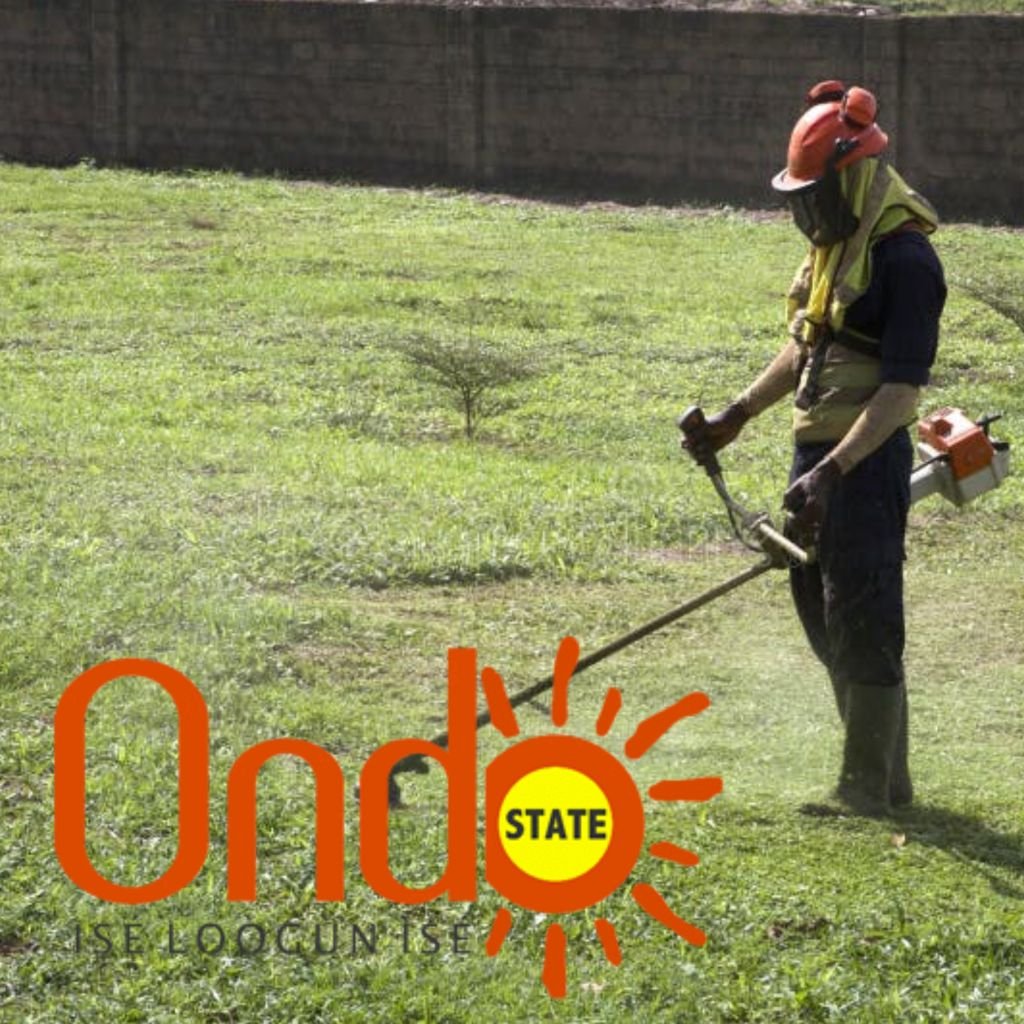
A recently circulated press statement celebrating the launch of a grass-cutting initiative in public primary and secondary schools within Okitipupa/Irele Federal Constituency issued by Honourable Bidemi Joshua Obayangban, Special Assistant to Governor Lucky Aiyedatiwa on Forestry raises a fundamental question about governance priorities in Ondo State: when did routine school maintenance become a development project?
In the statement, Honourable Obayangban said the initiative “reaffirms his robust commitment to enhancing education, promoting environmental sanitation, and safeguarding child welfare”, and described it as a comprehensive programme designed to relieve students of hazardous grass-cutting duties, as part of Governor Aiyedatiwa’s Ease Agenda. While the safety and welfare of pupils must always be taken seriously, portraying the provision of a grass-cutting mower as a major policy intervention reflects a worrying dilution of public expectations. Grass-cutting is not innovation; it is basic administration, a responsibility that should already be embedded in the operational budgets of schools and local governments.
For decades, public schools across Ondo State have grappled with far more severe challenges: collapsing classrooms, overcrowded learning spaces, acute teacher shortages, poor sanitation facilities, lack of instructional materials, and declining academic performance. Against this backdrop, elevating routine environmental upkeep to the status of a flagship initiative as outlined in Honourable Obayangban’s press statement appears disconnected from the realities facing the education sector.
For Context: What Educational Achievements by SAs Usually Look Like
Across Nigeria, Special Assistants and political aides who are genuinely applauded for their contributions to education are typically associated with interventions such as the construction or rehabilitation of classrooms, provision of desks and teaching materials, scholarship and bursary schemes for indigent students, teacher training and incentive programmes, establishment of ICT and digital learning centres, school feeding initiatives, and improvements in water, sanitation, and hygiene facilities. These are interventions that involve planning, funding, and measurable impact on learning outcomes, which explains why they often attract public commendation.
By contrast, grass-cutting however necessary remains a routine maintenance responsibility that should ordinarily be handled through existing education and local government structures, not elevated to the status of a flagship project.
More concerning is the implicit normalisation of institutional failure. The fact that pupils were ever required to clear bushes around school premises is itself evidence of systemic neglect. Correcting that failure should not be celebrated as exceptional leadership; it should be acknowledged as a long-overdue correction of an abnormal practice.
Governance is measured by impact, scale, and sustainability, not by symbolic gestures amplified through elaborate publicity. Without a clearly defined funding structure, trained personnel, equipment maintenance plans, and verifiable coverage across all schools, such interventions risk remaining episodic and cosmetic.
There is also the broader issue of accountability. When routine duties are repackaged as achievements as Honourable Obayangban’s press statement does, it lowers the bar for public office and distracts from urgent demands for meaningful reform. Citizens begin to applaud what should be standard, while deeper structural problems remain unaddressed.
True commitment to education reform requires more than photo opportunities. It demands sustained investment in infrastructure, improved teacher welfare, curriculum support, safe learning environments, and policies that measurably enhance learning outcomes.
Ondo’s children deserve classrooms that are safe, functional, and properly resourced not governance narratives built around maintenance tasks that should never have been neglected in the first place.
Grass-cutting may improve appearances, but it does not equate to progress. And until governance is defined by substance rather than symbolism, the education sector will continue to bear the cost.
