

How Cashless Payments Are Powering Small Vendors at the GTCO Food & Drink Festival
By Arikawe Femi, The People’s Voice Nigeria News
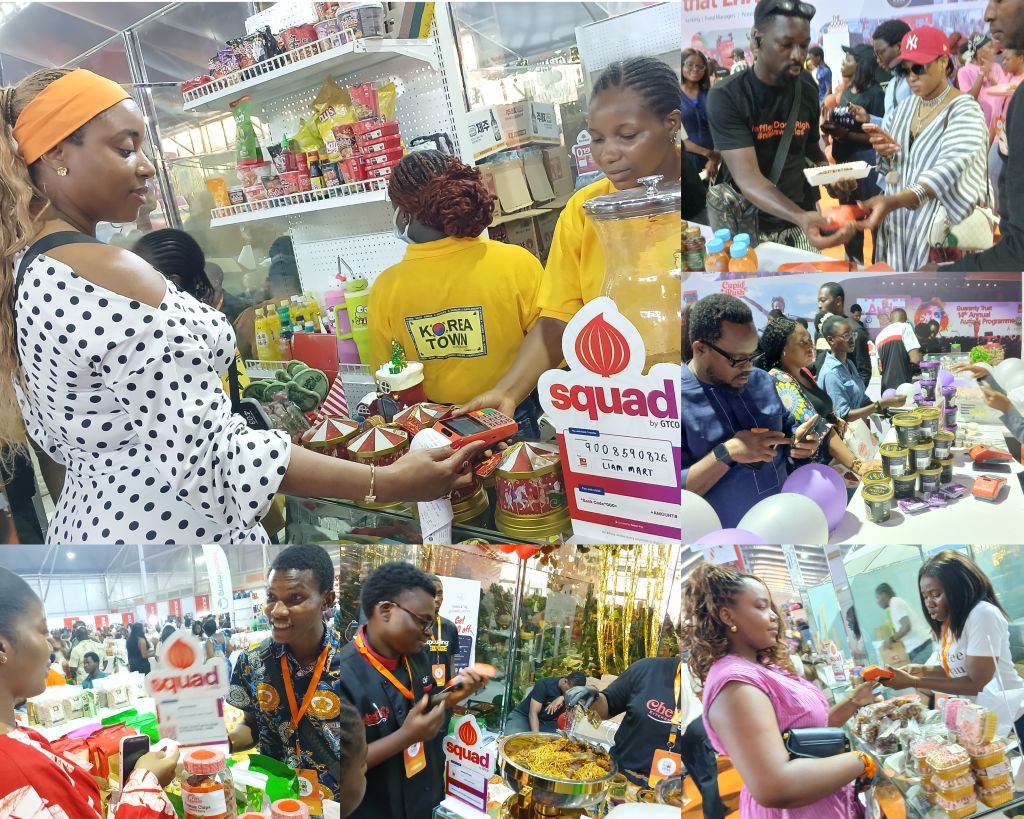
At peak hours inside the GTCO Food & Drink Festival, speed determines survival. The air is filled with music, conversation, and the aroma of food, but at the busiest stalls, one sound repeats constantly, the soft confirmation tone of a completed digital payment.


Across the venue, customers stretch out their phones, scan QR codes, make instant transfers, or tap POS terminals. There is little patience for delay. In a high-footfall environment, cashless payment systems have become the unseen engine driving sales.
For many small food businesses at the Festival, digital payments are no longer optional, they are essential infrastructure.
Seamless Transactions in a High-Pressure Space
At the Korea Town stand, the queue barely thins. Orders are taken in quick succession, meals are handed over, and payments are completed almost instantly through the Squad by GTCO payment system placed at the counter.
“The payment system makes everything easier for us,” the vendor says, gesturing briefly at the terminal. “People prefer to pay digitally, and once they pay, it reflects immediately. There’s no delay.”


In an environment where failed transfers or missing cash can stall operations, reliability becomes critical. “Here, we don’t struggle with change or waiting. We just move to the next customer,” she adds.
Beyond speed, the presence of a structured digital payment platform also builds trust. “When people see a proper payment system, they trust the business more. It feels organised and professional.”
Multiple Payment Options, Same Result
A few stalls away, at NU’EDEN FOODS, the experience echoes a similar reality. Customers complete transactions through a mix of bank transfers and POS payments, allowing the business to keep pace despite intense competition.

According to the NU’EDEN FOODS representative, offering multiple cashless options has helped reduce friction during peak sales periods.
“We accept transfers to our GTBank account, and we also use POS,” he explains. “The POS is from GTBank as well, so everything works smoothly.”
For him, the efficiency of the payment process has eliminated what is often a major challenge for small vendors at crowded events. “It’s fair, it’s nice, it’s cool,” he says. “There’s no stress.”
Managing Competition Without Losing Momentum
The Festival environment, he notes, is highly competitive, but seamless payments help maintain balance.
“It’s competitive, but we’re pushing through,” he says. “Compared to normal weekends, sales have been balanced so far.”
That balance is important. Faster transactions mean shorter queues, reduced customer frustration, and the ability to serve more people within limited hours—advantages that directly influence revenue.
More Than Convenience, a Growth Enabler
Across the Festival grounds, similar scenes unfold. Vendors rely on instant confirmations and POS reliability to keep operations moving. In this context, cashless payments are not just about convenience; they are about capacity.
For small businesses already benefiting from the Festival’s zero-cost participation model, efficient payment systems complete the equation—ensuring that access to customers translates into real earnings.
“This experience has shown us what is possible,” the Korea Town vendor reflects. “It’s not just about selling food today. It’s about understanding how systems like this can help us grow.”
As another payment confirmation sounds and a new order is taken, the story repeats itself—quietly illustrating how infrastructure, when done right, can empower small enterprises at scale.
