

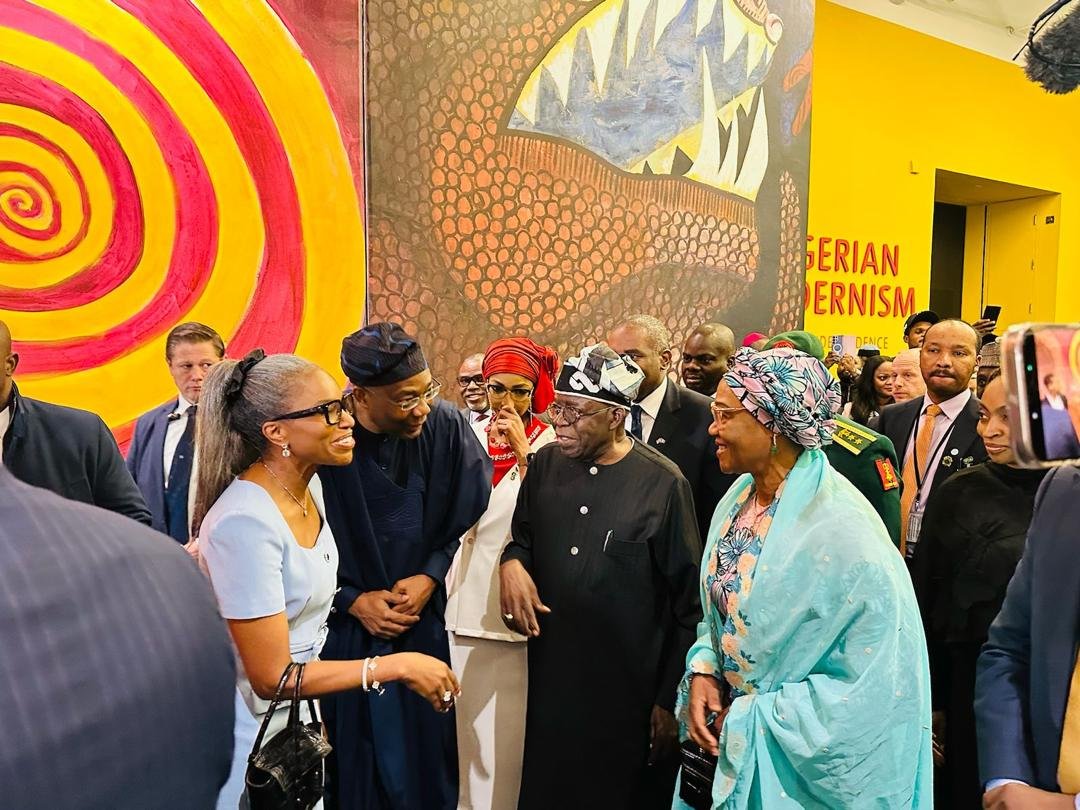
Tinubu at Tate Modern: A Cultural Signal for Nigeria’s Renaissance and Africa’s Creative Future
By The People’s Voice Nigeria News
When Bola Ahmed Tinubu walked through the halls of Tate Modern to experience the Nigerian Modernism exhibition, it marked a defining moment one that reflects Nigeria’s cultural renaissance, the growing strength of its creative economy, and Africa’s evolving development trajectory.
At its core, the visit signals a strategic shift in how Nigeria positions culture—not as a peripheral asset, but as a central pillar of national identity, economic growth, and global influence.
A Cultural Renaissance Reclaimed
The Nigerian Modernism exhibition highlights a generation of artists who, in the mid-20th century, broke away from colonial artistic frameworks to establish an independent and distinctly African voice. By engaging with this legacy on a global platform, President Tinubu reconnects Nigeria’s present with a defining era of cultural self-expression.
His presence elevates this artistic heritage from historical memory to national priority, reinforcing a renewed commitment to cultural identity and storytelling.
At a time when global engagement is increasingly shaped by narratives and identity, the visit signals Nigeria’s determination to reclaim and project its story with clarity and confidence.
Culture as Economic Strategy
Beyond symbolism, the visit underscores the growing recognition of culture as a viable economic driver.
Nigeria’s creative industries spanning visual arts, music, film, fashion, and literature continue to command global attention. Afrobeats dominates international charts, Nollywood ranks among the world’s largest film industries, and African art is gaining prominence in leading galleries and auctions worldwide.
By spotlighting Nigerian art at Tate Modern, one of the world’s most influential cultural institutions, the visit reinforces the commercial viability of the creative sector.
It positions creativity as a major export capable of:
- Generating employment opportunities
- Attracting foreign investment
- Diversifying Nigeria’s economy beyond oil and gas
In practical terms, such exposure is expected to drive increased global demand for Nigerian artists, foster institutional partnerships, expand opportunities for creative entrepreneurs, and boost investor confidence in Africa’s cultural industries.
Strengthening Cultural Diplomacy
President Tinubu’s engagement also highlights the strategic role of cultural diplomacy in global relations.
In an era where influence is shaped as much by perception as by policy, culture serves as a bridge humanising engagement and fostering mutual understanding.
At Tate Modern, Nigeria was not negotiating policy frameworks; it was telling its story—one that resonated with a diverse audience of policymakers, investors, and cultural leaders.
Such engagements strengthen Nigeria’s international standing not only as an economic force but as a cultural powerhouse while redefining its relationship with countries like United Kingdom through contemporary collaboration in art, innovation, and enterprise.
A Catalyst for Africa’s Development
While the moment is distinctly Nigerian, its broader implications extend across the African continent.
As one of Africa’s largest economies and leading cultural exporters, Nigeria often sets the pace for regional trends. By elevating its creative sector globally, it opens pathways for other African artists, institutions, and markets.
Africa’s development narrative is gradually shifting—from reliance on natural resources to the growing importance of intangible assets such as creativity, innovation, and intellectual property.
The creative economy presents opportunities for:
- Youth employment across a rapidly growing population
- Digital innovation in content creation and distribution
- Enhanced global cultural influence
- Inclusive economic growth driven by talent and enterprise
Bridging Heritage and the Future
Perhaps the most significant impact of the visit lies in its ability to connect past, present, and future.
The pioneers of Nigerian Modernism redefined identity in their era. Today’s creatives are expanding that legacy on a global digital stage. By honouring this lineage, the visit reinforces continuity and inspires a new generation of innovators.
It also places a responsibility on policymakers to support the sector through funding, education, intellectual property protection, and improved access to global markets.
A Defining Signal
In the final analysis, President Tinubu’s presence at Tate Modern sends a clear signal: Nigeria recognises the power of its culture and is prepared to invest in it as a driver of national and continental transformation.
It affirms that Africa’s future will not be built on resources alone, but on ideas, stories, and creative expression—and in that future, culture will lead.
