

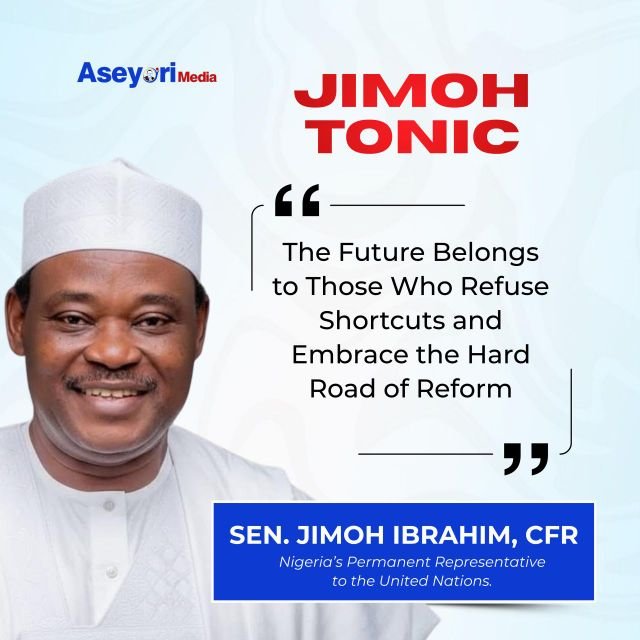
Jimoh’s Tonic: The Future Belongs to Those Who Refuse Shortcuts and Embrace the Hard Road of Reform
By Onawumi Ayochris
In every generation, courage must rise above convenience, and vision must triumph over the temptation of shortcuts. Nigeria’s current resolve to rebuild through reforms rather than rely on external bailouts is more than an economic decision, it is a call to action, especially for the youth, that greatness is forged through resilience, sacrifice, and determination.
Jimoh Ibrahim, a Senator and Nigeria’s Permanent Representative to the United Nations, has remained a consistent voice in advancing the country’s reform agenda. On the global stage, he has highlighted economic realities, warning of international risks while advocating stronger collaboration between the legislature and executive arms of government.
In his recent remarks, he reaffirmed that under President Bola Ahmed Tinubu, there will be no reversal of ongoing economic reforms. According to him, the difficult but necessary policies currently being implemented represent the only viable path toward long-term national prosperity.
His stance reflects a broader philosophy that leadership is not defined by popularity but by the courage to make difficult decisions in the face of criticism. From his engagements at the United Nations to his contributions at home, Ibrahim’s position underscores the belief that reforms are essential to national growth and stability.
President Tinubu’s “Renewed Hope” agenda has similarly been framed as a long-term strategy aimed at repositioning Nigeria’s economy. Rather than relying on external dependency, the administration has prioritised structural reforms intended to build internal capacity and economic resilience.
The central message remains clear: while shortcuts may appear attractive, they rarely produce sustainable results. Meaningful progress, whether at the individual or national level, often requires discipline, patience, and a willingness to endure temporary hardship for long-term gain.
For many Nigerians, particularly young people, this moment represents both a challenge and an opportunity to contribute ideas, embrace innovation, and participate actively in shaping the country’s future.
